Sep-Oct 2024
Napoli – Mt. Vesuvius-Salerno-Vietri Sul Mare – Cetara – Ravello – Amalfi – Maiori – Minory – Positano – Sorento – Capri – Ischia – Herculaneum – Castelammare di Stabia
Napoli: noisy, humid, messy and disheveled is exactly a place that I enjoy to be in and enjoy to explore. T
We arrived in late September when the weather was still warm and stayed 3 nights and 2 days in the Spanish Quarter. https://en.wikipedia.org/wiki/Quartieri_Spagnoli. The Spanish Quarter is a unique maze of streets full of restaurants and bars and is very central and convenient to explore the city. The first thing we noticed is the Maradonamania. Everything is marked by Diego Maradona (famous football player), t- shirts, flags and even cocktails named after him, especially in the Spanish Quarter.
We took one free walking tour of the center; visited the Duomo and the Archeological museum famous for its Secret Room containing a unique collection boasting 250 sexually-themed objects, mainly dug out during the excavations of Pompeii and Herculaneum. https://mann-napoli.it.
Napolitanos are very proud of their metro and the two award winning stations: University and Toledo. I wasn’t impressed with the University one but Toledo is definitely worth visiting. It has a depiction of the volcano in the ceiling and everybody is trying to take its pictures while riding up and down the escalator. We also took the Montesanto Funicular to the very top where you can see the entire enormous city. The Funicular is close to the fish market and is convenient to go up before or after lunch at the market. https://en.wikipedia.org/wiki/Montesanto_Funicular.
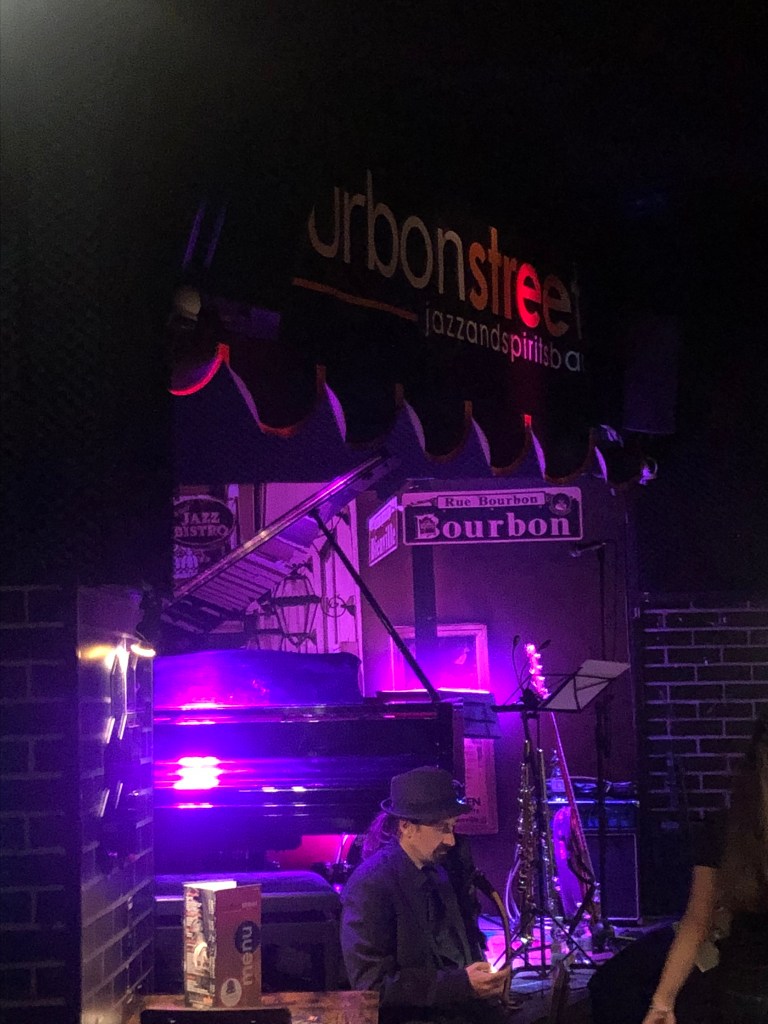
For eating and drinking I recommend the more upscale popular area Chiaia, with numerous bars and restaurants and the central fish market for fresh fish for lunch. In Chiaia we especially liked Fusion 66 bar where we befriended its nice owners. For a home cooked authentic Italian meal I recommend Trattoria da Pasqualino close to the central train station. At night we went to the Bourbon Street Jazz bar for a really good music.
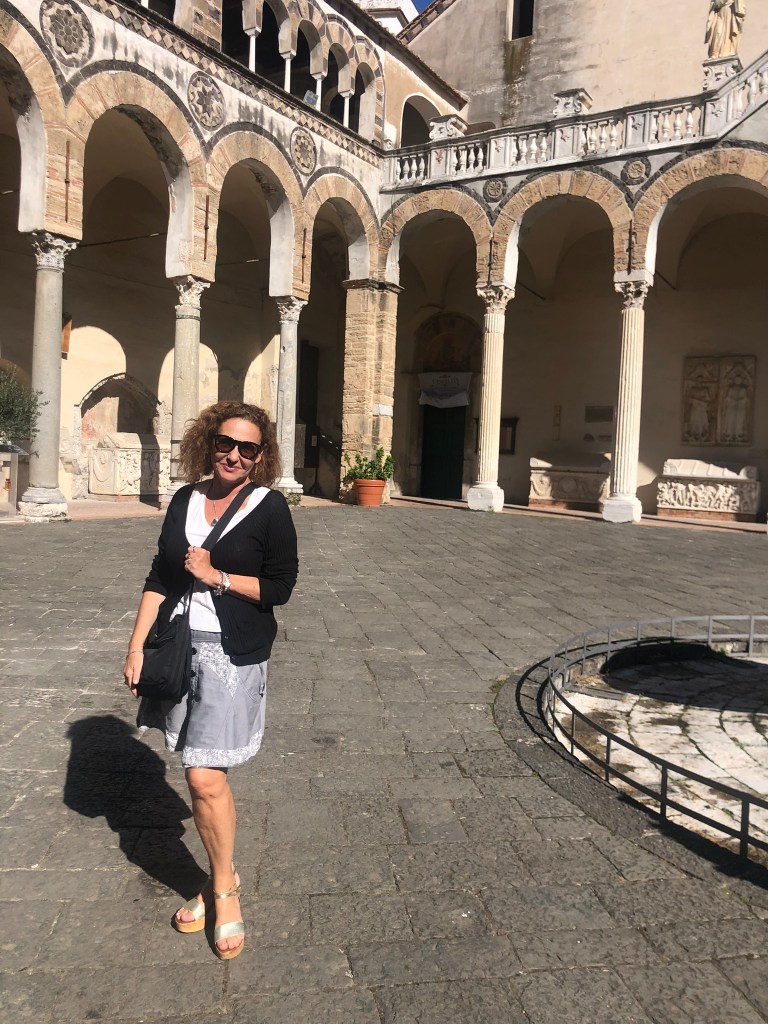
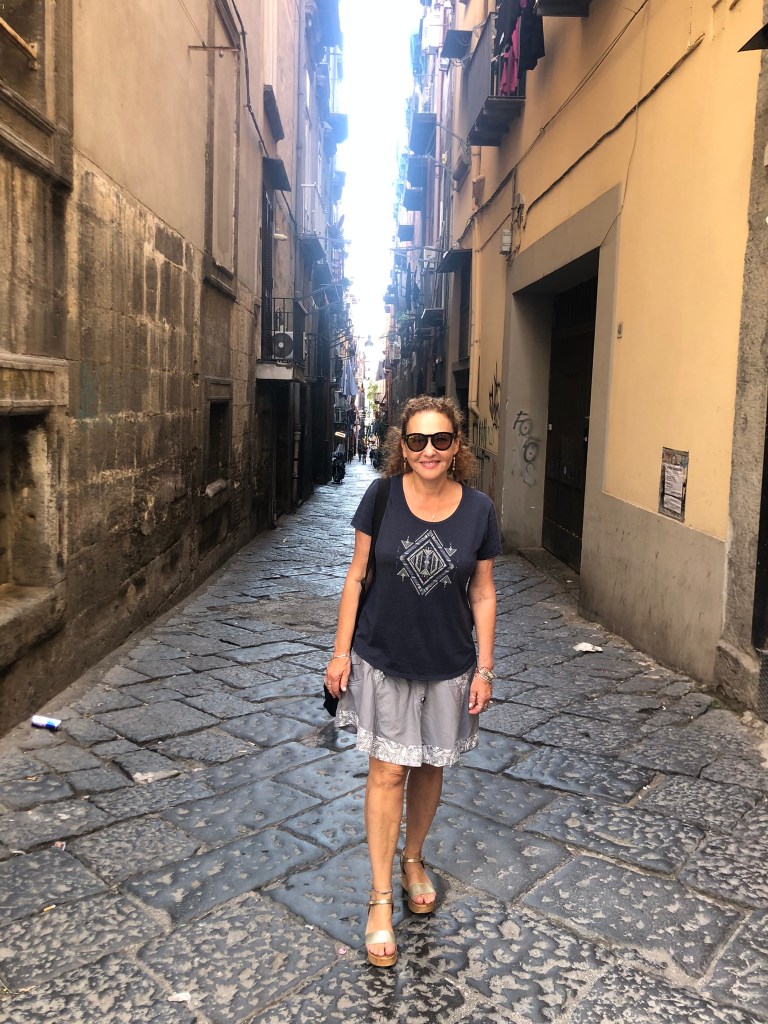
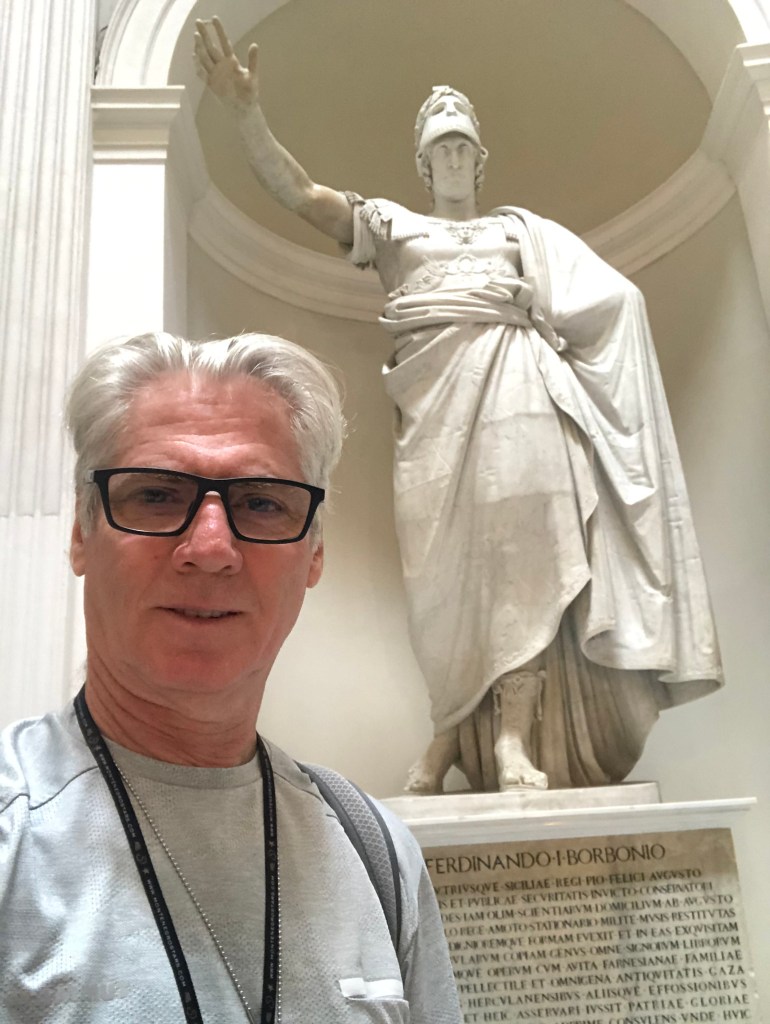
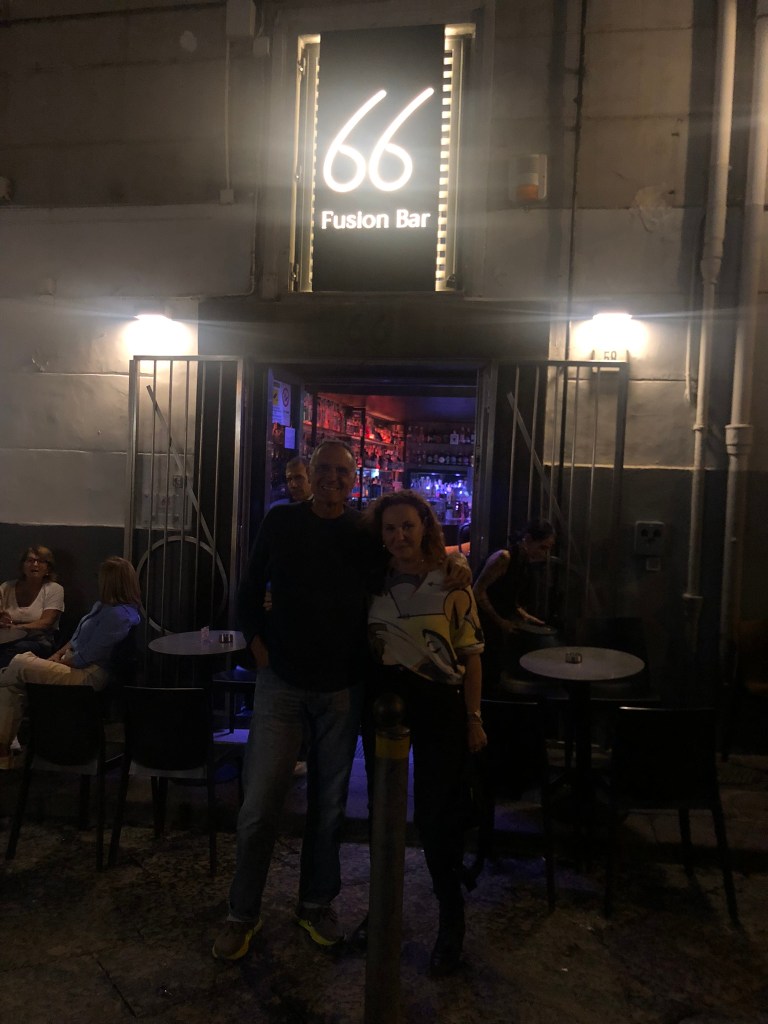
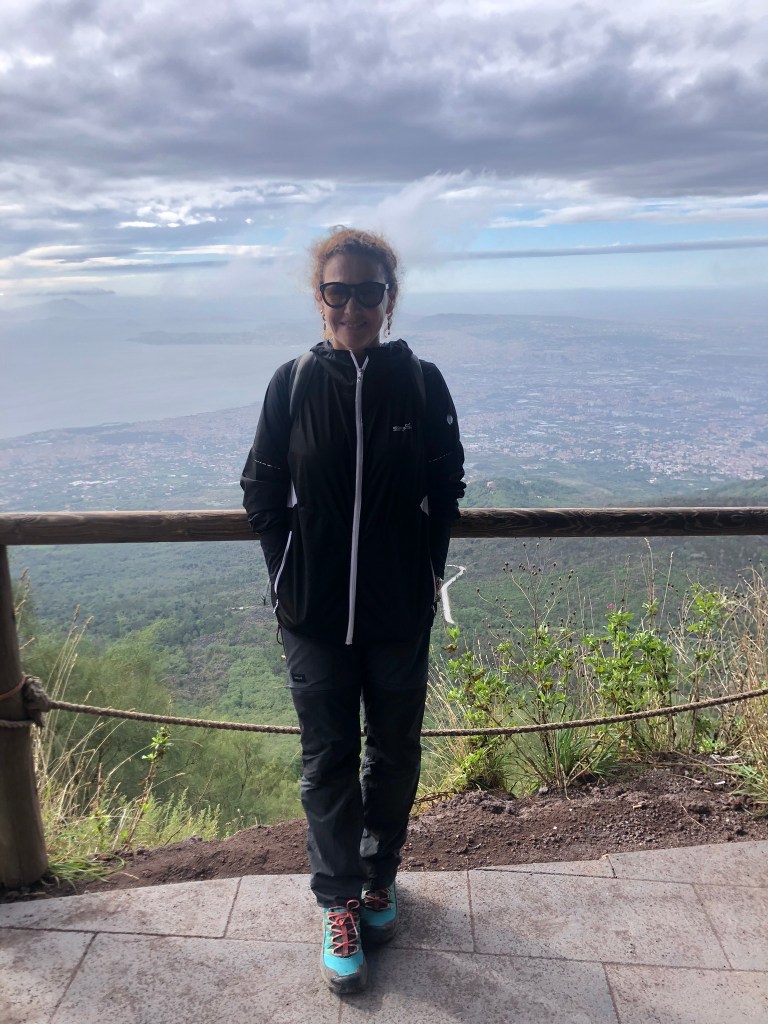
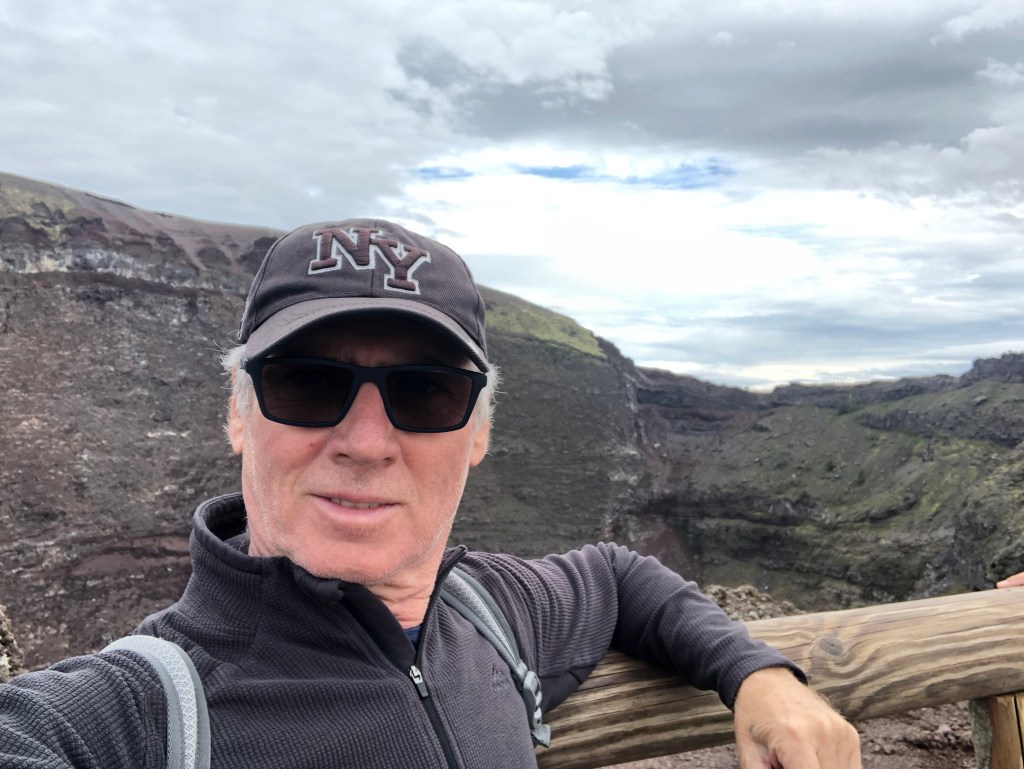
After 2 days in Napoli we rented a car and began our road trip south starting with a hike up Mt. Vesuvius.
Few words about whether it’s advisable to have a car on the Amalfi coast or take buses. The pros for a car: convenience, not having to carry ones luggage, access to remote places. Cons: Amalfi Coastal Road is not for nothing called Serpentina Amalfitana. The roads are narrow above the cliffs with non-stop turns and often scary and challenging. The traffic is bad (even in October), parking is expensive and hard to find and some days we didn’t even use it, so it was kind of expensive bag storage. Pros for buses: not having to drive and/or park, cheap. Cons: Sometimes there are so many people there is no room, they come about once an hour or half hour. Most loggings are up the mountain and you need to carry your bags up, no freedom schedule dependent. Another option is to use ferries, the stop in most of the towns along the coast and is fun to be on. Same pros as the bus, but again the ports are usually below the towns and then you have to carry your luggage up and you are also schedule dependent.
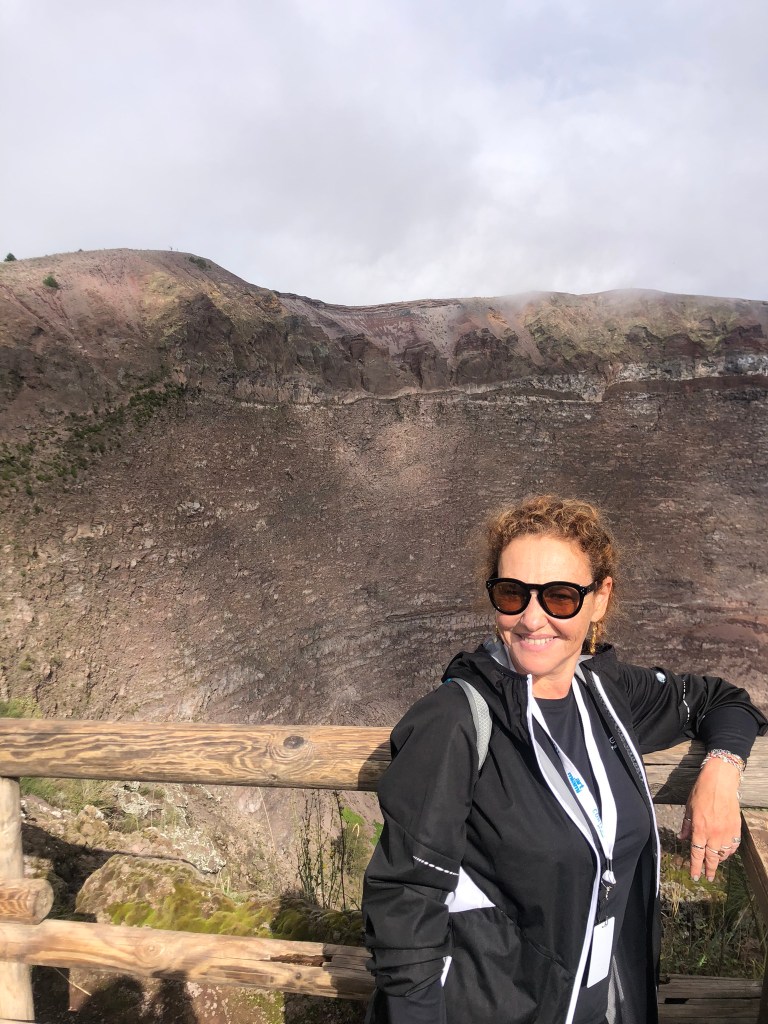
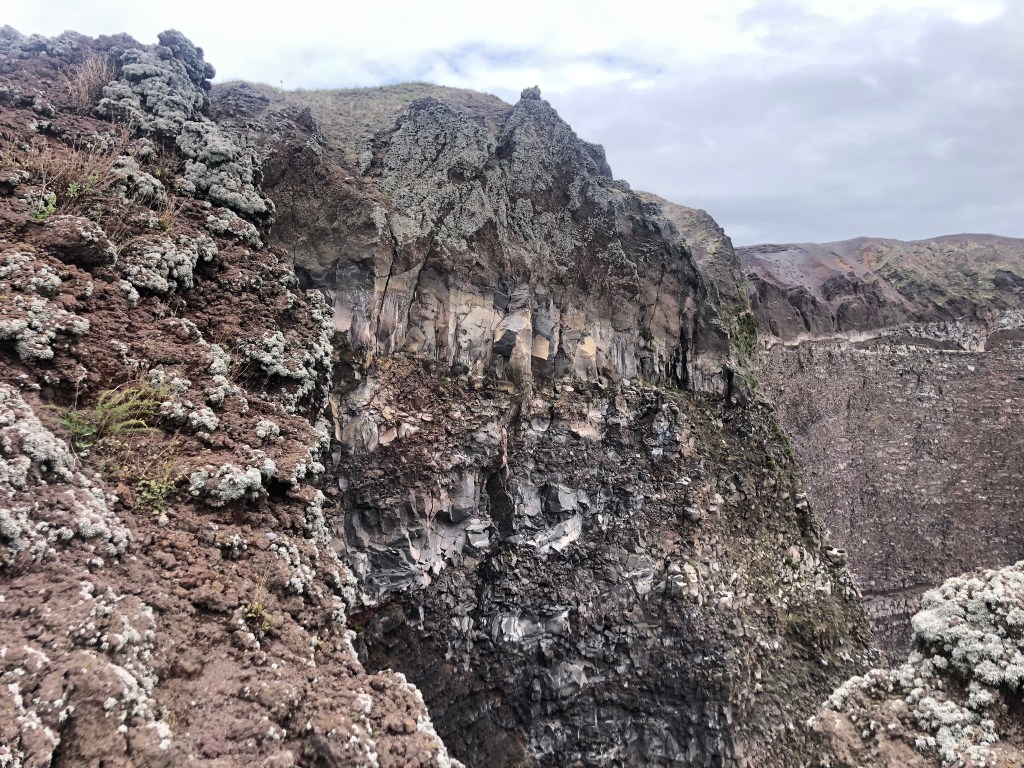
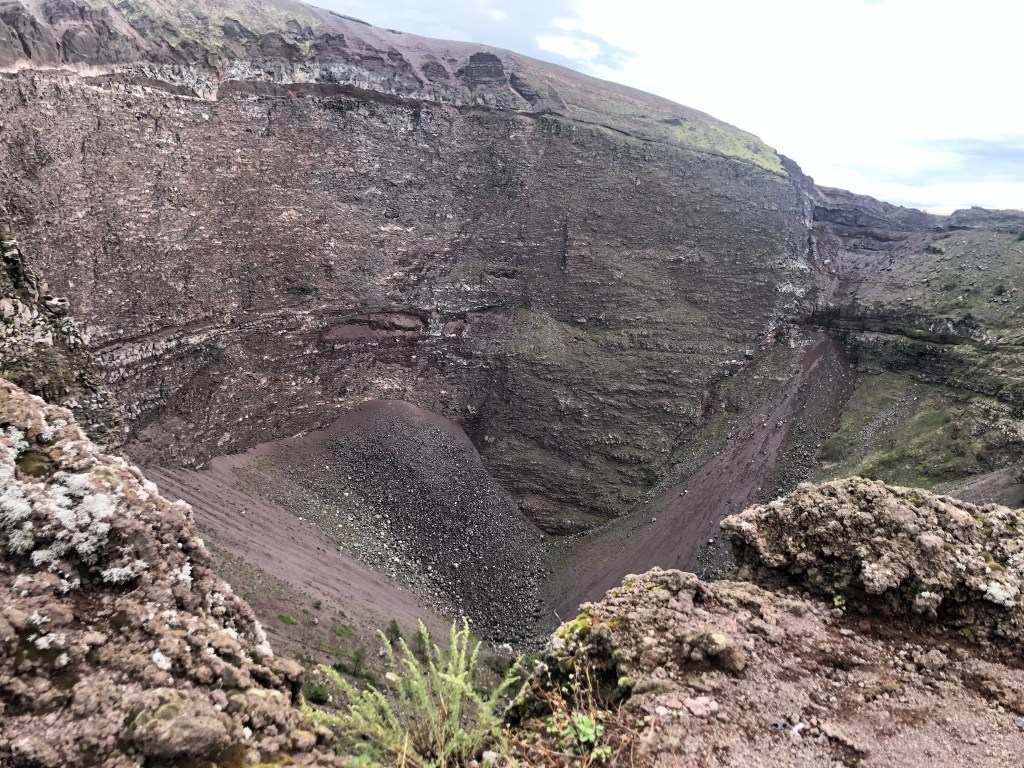
On the way to Vesuvius I made a mistake and instead of reading the instructions on the website just plugged in the directions and ended up on the other side of the mountain at the gate (that was closed) for bus tours. It took us 45 minutes to loop around the mountain to get to the right entrance. Once you get to the upper parking there is a shuttle bus to take you up to the entrance. See instructions: https://www.parconazionaledelvesuvio.it/en/visit-the-park/the-paths/the-great-cono-2-2/. Also, reserving and paying for parking ahead of time is essential otherwise you will have to walk up to the shuttle bus. About ¾ of the way up the trail there is a station with free guided tours to walk to the top. It was kind of interesting but the guide’s explanations were a bit too long, he was repeating the same things over and over again working his way to a good tip. Nevertheless, I think it was totally worth it. By the way, the hike is not difficult. However it was really cold and windy on top.
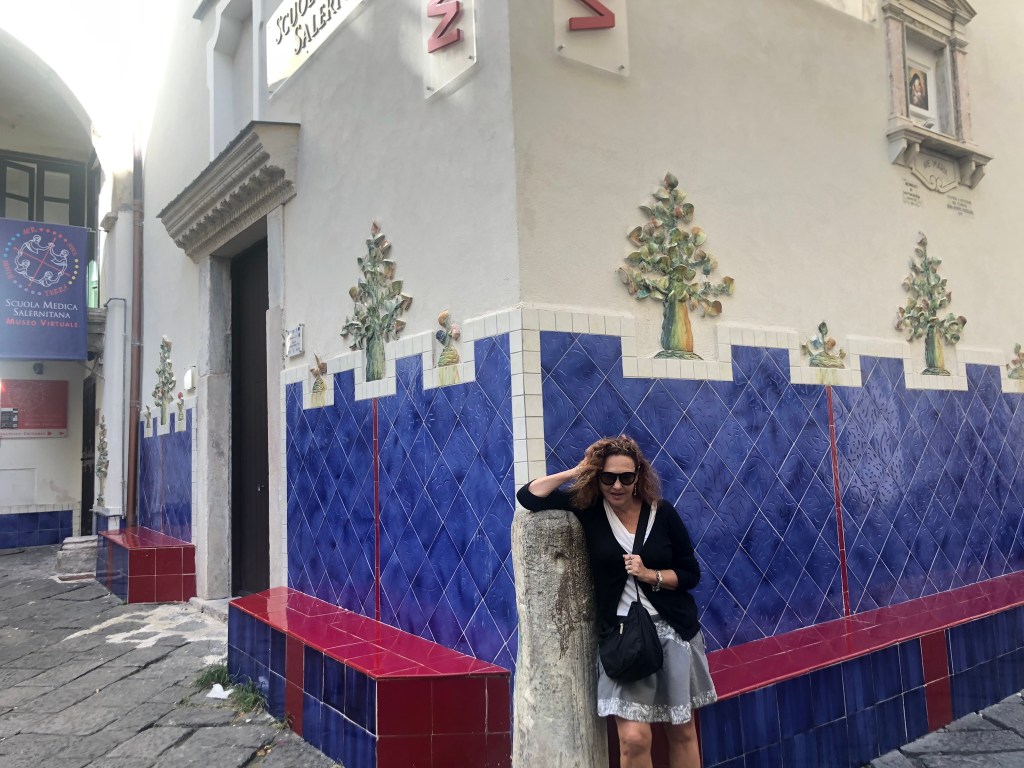
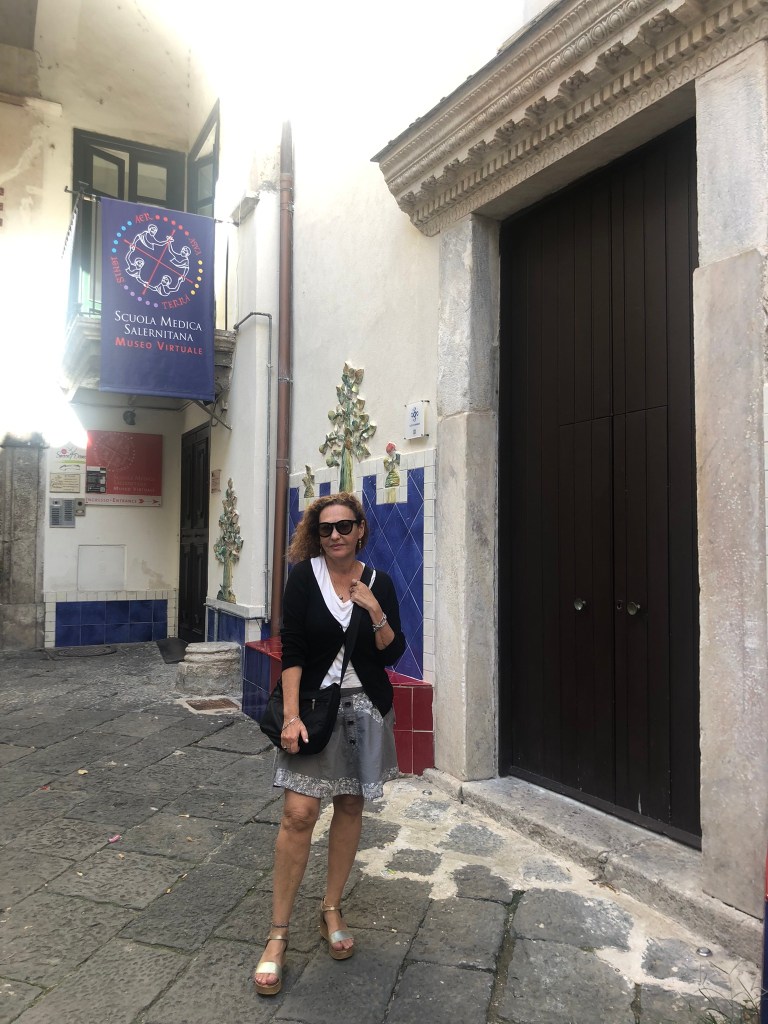
After finishing with the Vesuvius we drove all the way to Salerno, our farther stop on this trip. The highways in this area are pretty good and fast and we got there by late afternoon. However, we couldn’t find a decent place to stay and decided to venture further from the city and ended up on Vietri Sul Mare, few kms north east, which turned out to be a total gem. https://en.wikipedia.org/wiki/Vietri_sul_Mare. We loved this little picturesque town so much that we stayed there for 2 nights. Actually many locals come there for weekends to shop for famous ceramics and to eat in local restaurants. It also has beaches but at this point it was beyond the beach season even though it was pretty warm during the day but cold at night. We went back to Salerno one afternoon but actually it was kind of disappointing and we were happy finding Vietri Sul Mare.
Next was a long driving day. We started with Cetara, a cute coastal town, worth a coffee stop and continued to Ravello, a hill town up in the mountains. The attraction in Ravello besides breathtaking views of both the sea and the mountains are two villas: Villa Rufolo and Villa Cimbrone Gardens. https://villarufolo.com/, https://www.hotelvillacimbrone.com/it/villa-cimbrone. The later is a fancy hotel and gorgeous venue for a wedding. Overall, Ravello is an upscale town with expensive hotels and restaurants.
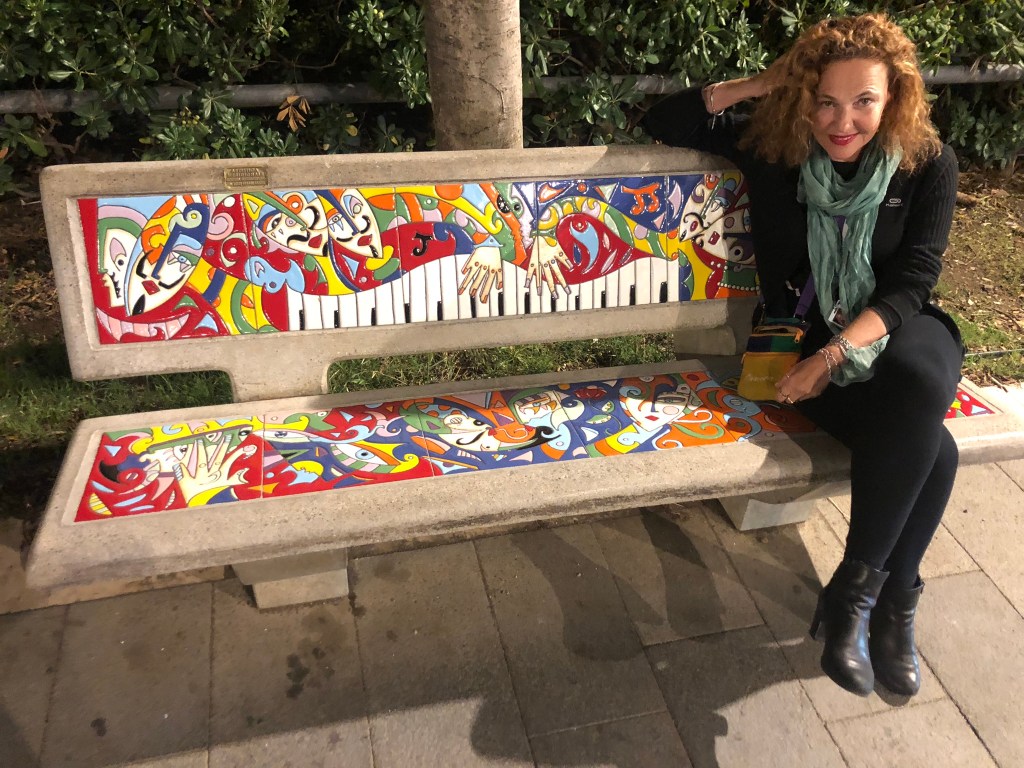
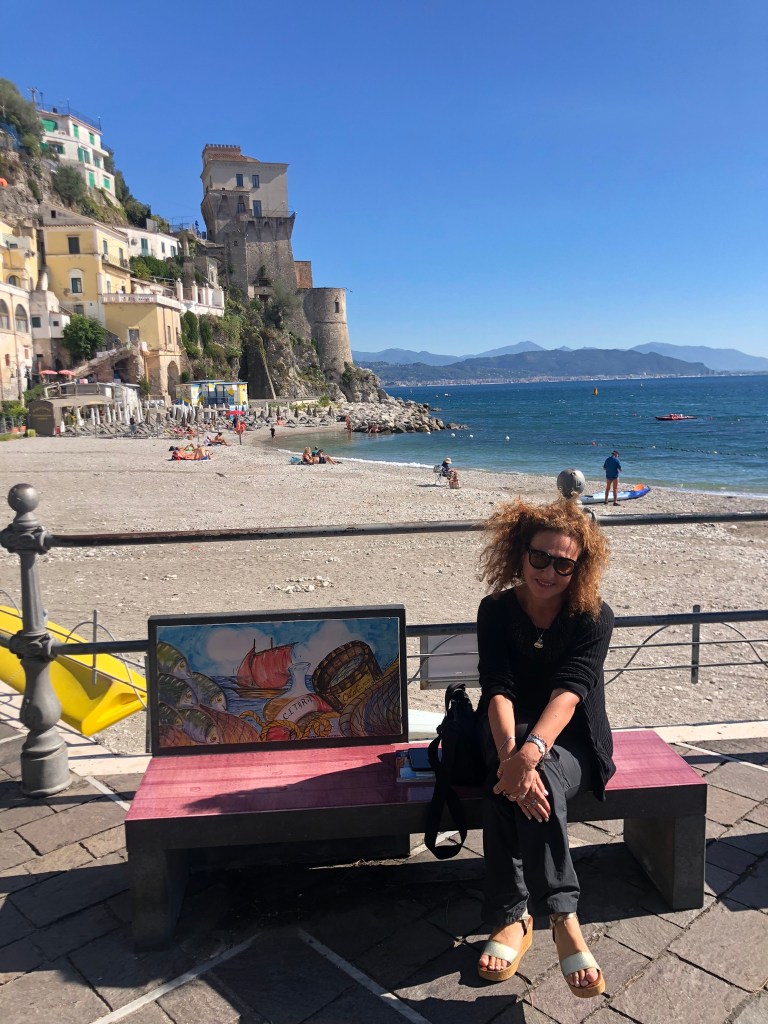
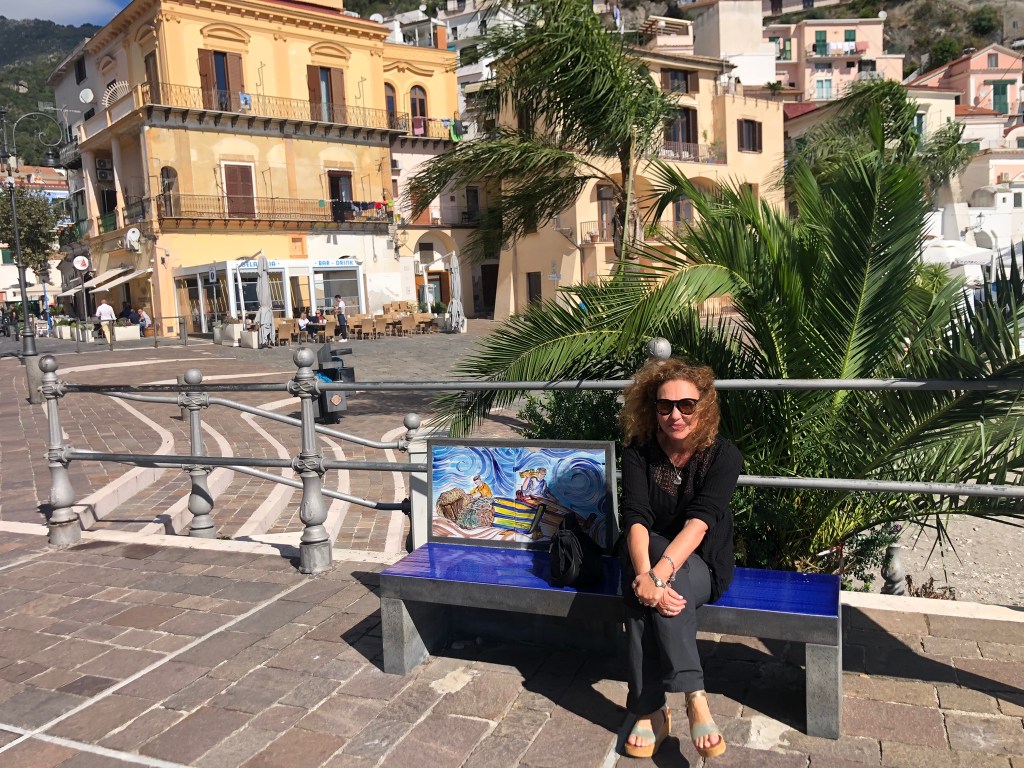
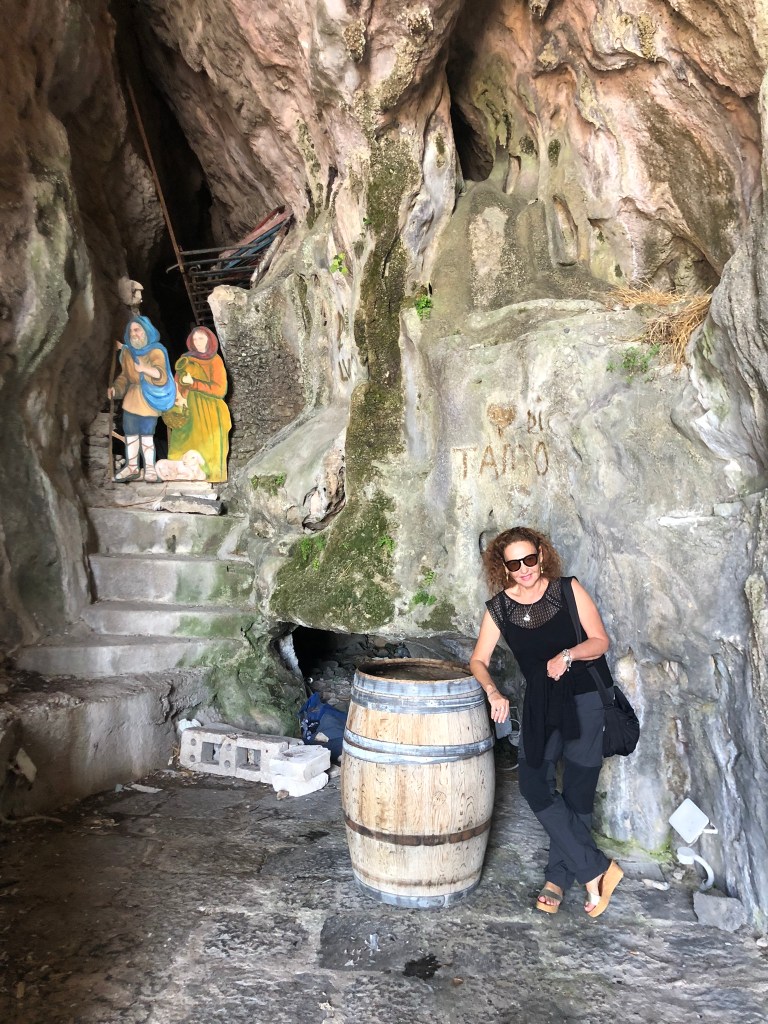
In Ravello we had somewhat hard time finding accommodations and a restaurant for dinner without reservations and that’s when we realized that notwithstanding this being October there were still huge crowds of tourists in the area. Nevertheless it all worked out, we stayed in Hotel Toro in the center and had a fabulous Italian dinner (unfortunately I can’t find the name of the restaurant). The next morning we checked out the street market with some produce and cloths near the central parking.
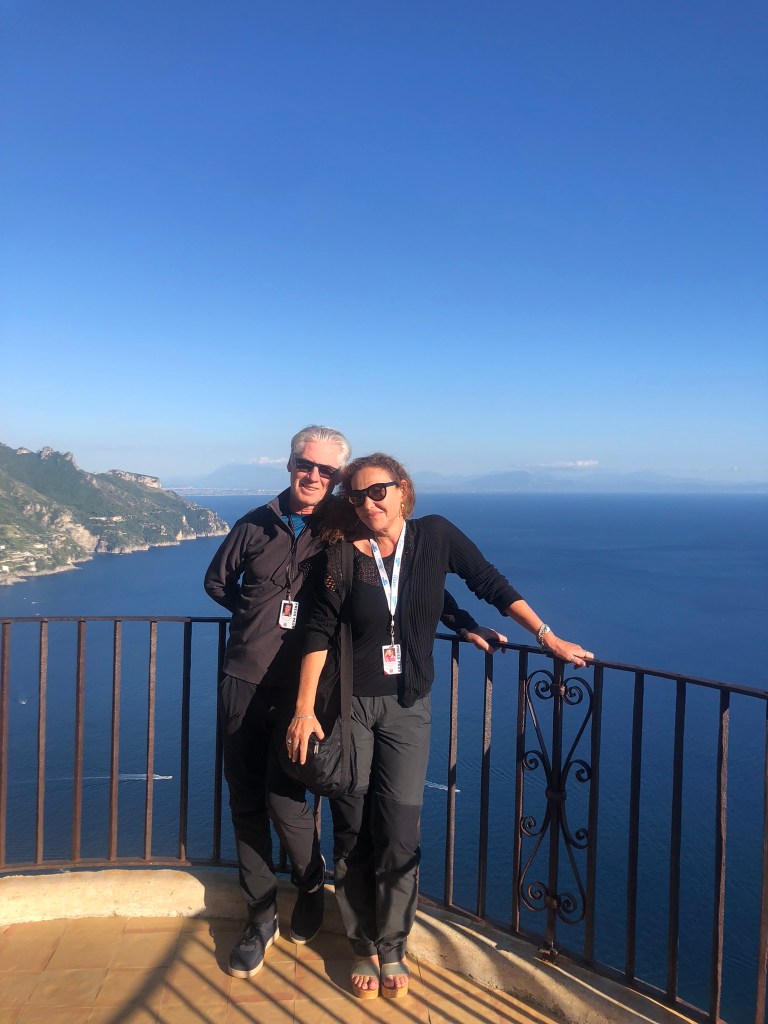
After Ravello we drove to Amalfi, which was packed and barely found a parking spot in the municipal parking south of town. It was so packed that it was hard to walk thru the crowds. The best thing about Amalfi was the Paper Museum, Museo Della Carta, where we got a private tour and made our own sheet of paper. https://www.homofaber.com/en/discover/amalfi-paper-museum-craft-italy. I absolutely loved this place and the best news -no tourists! After a quick drink we escaped back south down the coast and spent the next two nights in Maiori.
Maiori is a good hub from which to explore the Amalfi Coast; it has fewer tourists and its flat, so not much walking up the hills. A notable restaurant in Maiori is Piñata 1903.
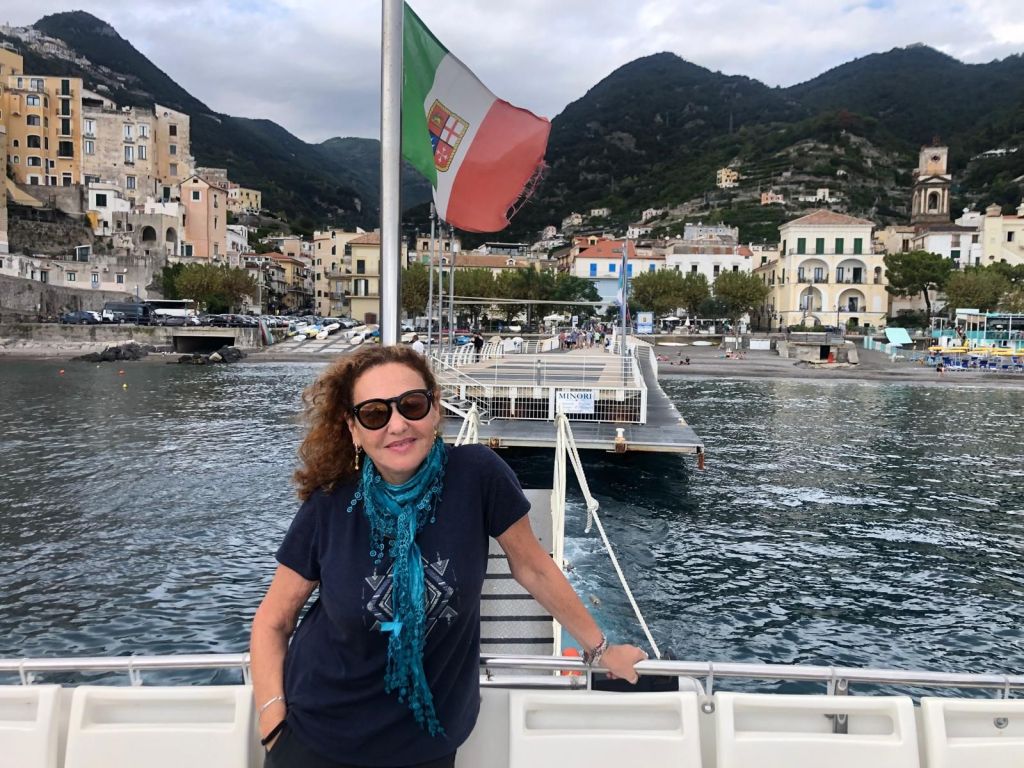
We walked the Lemon Trail the next day, a three kms walk up the mountains thru lemon groves and breathtaking views which ends in Minori, another cute quiet town. https://www.positano.com/en/e/the-path-of-the-lemons. The hike is not easy but totally worth it. From Minori we took a quick ferry ride back to Maiori. We could walk back easily but wanted to check out the ferry.
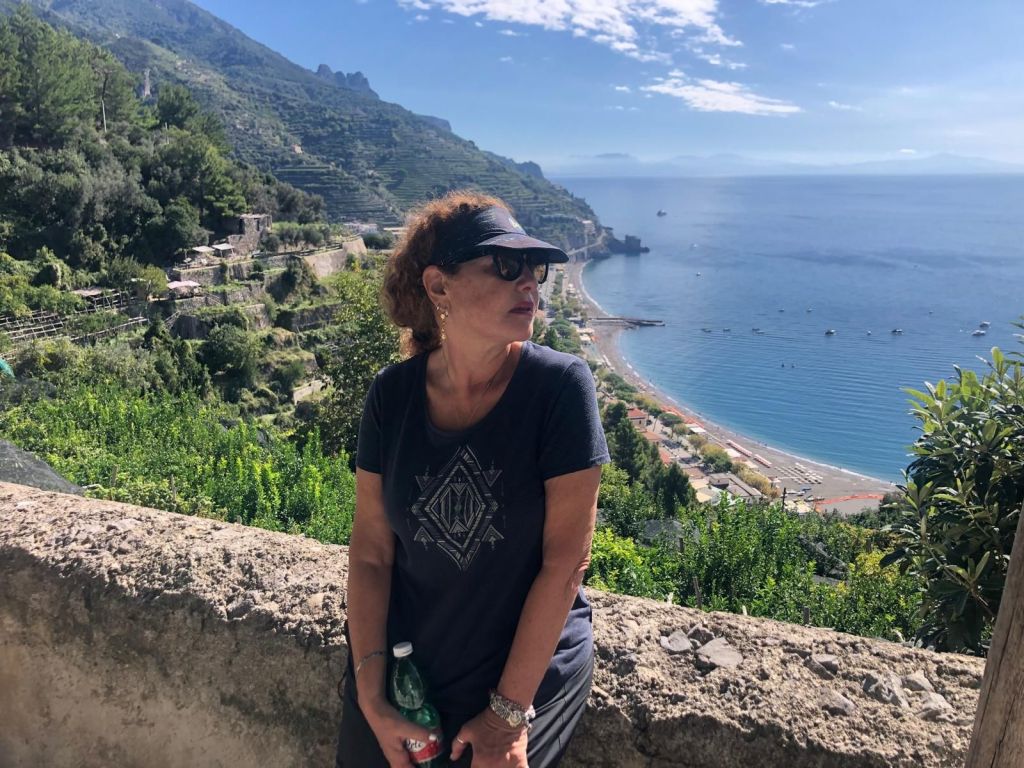


After leaving Maiori, we stopped for lunch in Positano, a cute hilly town, but didn’t stay there because of extreme overcrowding and insane parking fees. After lunch we continued to Sorrento, probably my favorite town on the coast. We stayed there for three nights and once more after returning from Ischia. We took one great free walking tour that was historically and factually informative with good tips on where, what and how. We did a lot of shopping here, and following our guide’s recommendations we ate at Il Leone Rosso, good restaurant away from the masses and at some grocery store, yes, grocery store, that has tables outside and prepares food to order and has a good selection of reasonably priced wines. This was one of the best meals on this trip. For entertainment, we went twice to Piano Bar Filau Club, with great live music; it opens at 11 pm, and stays open till 4 am.
From Sorento we took a ferry to Capri. The ferry boat port is below the city and there is an elevator from the town that goes down to the port. There are several different ferry companies, each having their own ticket office windows next to each other and it’s all very crowded and chaotic.
Capri is a beautiful island full of expensive restaurants, upscale shopping, wealthy tourists and gorgeous views. https://en.wikipedia.org/wiki/Capri. Capri town is on top of the mountain to be reached by a bus or a taxi. When we arrived there were huge lines to get either one so we just walked up a somewhat strenuous climb but since this was an overnight trip we only had small daypacks that allowed us the ability to walk, otherwise it would take at least couple of hours to wait for transportation. Something to keep in mind…
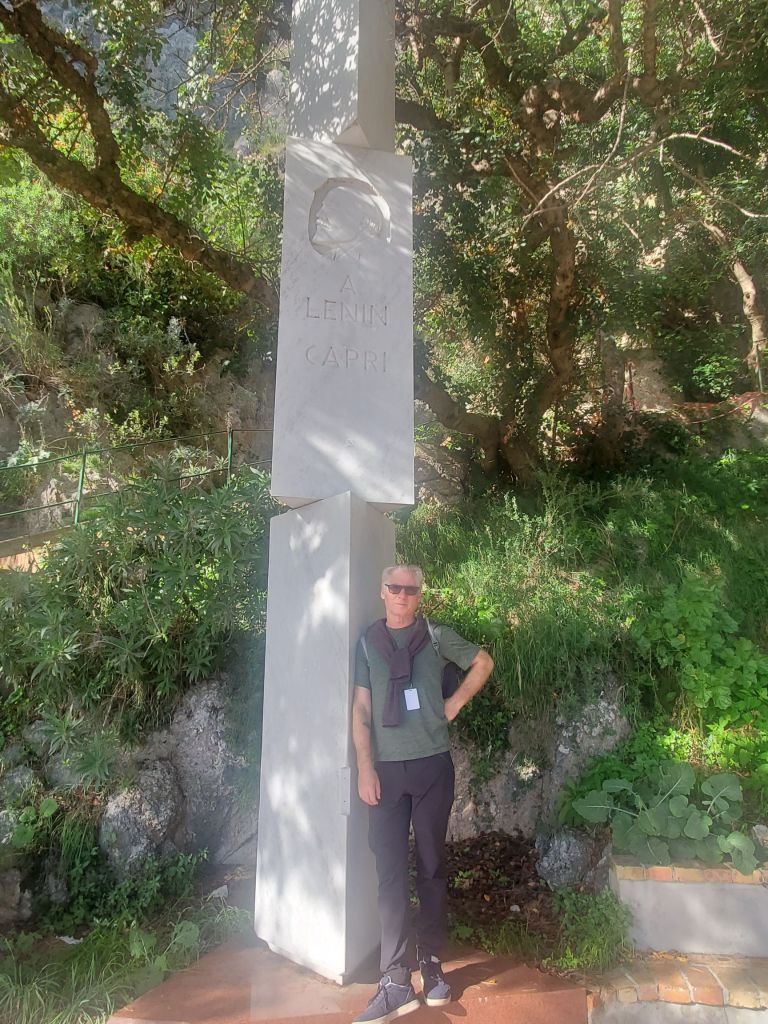
Capri Town is a nice place to stroll in; there are several marked routes around Capri Town with views and statutes of Pablo Neruda, Lenin and Gorki. Piazzeta is the focal center of Capri Town where well dressed people are having coffee. Capri Rooftop is a nice outdoor bar/restaurant to cool off in the afternoon sipping on cocktails and to enjoy the views. For dinner we went to Pescheria, a fish shop during the day turned restaurant at night. The place is tiny and it does not take reservations but we got lucky and arrived slightly before the crowds and had an assortment of fresh seafood. The prices are very reasonable compare other restaurants in town. https://www.pescherialebotteghe.it/
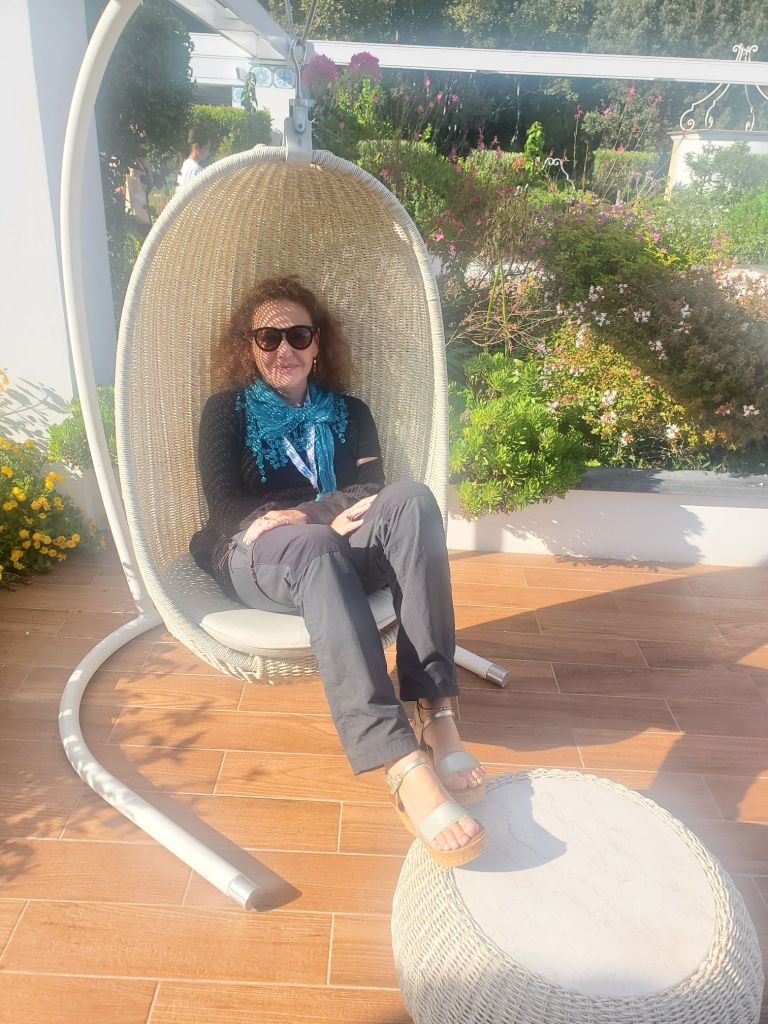
On the 2nd day we took a bus to Anacapri, the 2nd town on Capri, which is equally charming but somewhat less posh. There are two attractions that I recommend but we didn’t get to do either one. The first is a funicular ride, https://en.wikipedia.org/wiki/Capri_funicular, which we decided not to do because there was an hour long line to go up and equally long wait to get down and we didn’t want to risk missing our ferry. The second attraction is the Red House which looks very interesting but was closed that day. https://www.afar.com/places/museo-casa-rossa-di-anacapri-anacapri. We ended up strolling around and ate lunch at La Arcate.
After lunch we took a bus down to the port, which also took awhile because of a long line, and took a ferry to Ischia.
We stayed one night in Ischia which was way less crowded then the Amalfi Coast but since this was not beach weather, and Ischia is famous for its beaches, there was not much to do there. We had dinner in one of the many restaurants flanking the port but didn’t find anything more to do later in the evening. For sights the main attraction is the Ischia Bridge, https://www.ischiainsider.com/en/e/ischia-ponte, a very impressive sight. Mainly we just walked around most of the day and took a regular (not tourist) bus around the island to see as much as we can.
On the way back to Sorento, our ferry was cancelled because of bad weather but they offered us an alternative route thru Napoli. If we didn’t come to the port to check again on the ferry we would have missed the alternative ferry to Napoli all together and would have to stay over in Ischia another night. So it’s important to keep in mind when planning a trip there that ferries get cancelled often when the weather is stormy. I wouldn’t recommend scheduling such trip closer to a planned flight for example.
We stayed another night in Sorento and drove to Herculaneum the next day. We both been to Pompeii in the past and opted for the Herculaneum this time. Its more compact then Pompeii but not less impressive. It still took us few hours to walk thru the pretty much well preserved ruins.
Few minutes away from the main entrance is a MAV Museum which I totally recommend especially if you have children. https://www.museomav.it/museum/?lang=en It has a vivid 3D reenactment of life in Herculaneum and makes the entire visit more interesting.
Our last night on the coast, we spend in Castelammare di Stabia which was recommended by our guide from Sorento. I never heard of this town which turned out to be a rather large beach town with many restaurants and a good overnight stop if one does not want to deal with Napoli traffic and/or crows in other places nearby. https://en.wikipedia.org/wiki/Castellammare_di_Stabia
 Sonia's Travel Blog
I loved this
I have beautiful memories of Southern Italy — and yes driving on the Amalfi Coast is very very very scary
But that whole part of the country is just so beautiful
LikeLike